
What Baraga County Deeds Record
The Baraga County Register of Deeds handles the recording side of local land evidence. Its files include deeds, mortgages, land contracts, liens, death certificates, plats, surveys, and other real-estate instruments. A deed transfers an interest in land. That sets it apart from a mortgage, which only secures a debt, or a lien, which asserts a claim against property. Reading the index entry alone is not enough. Match the entry to the instrument image, since the document type, parties, legal description, and recording data supply the transaction's context.
| Deed Type | What It Does | Common Use |
|---|---|---|
| Warranty deed | Conveys the grantor's interest with title promises stated in the instrument | Many ordinary sales |
| Quitclaim deed | Conveys whatever interest the grantor has without a broad title warranty | Family transfers and title cleanup |
| Personal-representative deed | Transfers estate property under a fiduciary's authority | Probate administration |
| Sheriff's or tax deed | Records a transfer following the applicable foreclosure process | Distressed-property chain |
| Correction deed | Corrects stated information in an earlier recorded conveyance | Name or description correction |
A Baraga County deed may state the price. It can also carry the legal description and any transfer-tax notation. Possession and land use are different matters. The deed alone does not settle them. A full review follows references to earlier deeds, plats, surveys, releases, court orders, and probate papers, which keeps the recorded title trail distinct from the tax roll and the parcel map.
Three Baraga County Deed Search Routes
Baraga County offers two online Fidlar routes plus a free in-person database search. Laredo serves frequent users. Tapestry suits occasional lookups and can reach other participating Fidlar counties. Fees apply to both online options. Choosing a route comes down to the scope of the deed search, and note that the county publishes no starting year for its online index.
| Access route | Best fit | Known limit or cost |
|---|---|---|
| Laredo | Frequent index use | Vendor fees and account terms apply |
| Tapestry | Occasional document searches | Transaction fees apply |
| Baraga courthouse database | Free in-person index work | Available during office hours |
The Register of Deeds sits at 2 South Main Street in L'Anse. Weekday hours run 8 a.m. to 4 p.m. Call 906-524-6100 before any long trip. That matters for historic volumes and certified copies. Staff can explain access and copying, but the county does not supply blank deeds or legal advice.
Baraga County Deed Index Search Keys
The recorded index is not a street-address tool. Start with BS&A Online when only the address is known. That lookup yields the owner name, parcel number, and full legal description. Carry those details into the deed search. Try name orders and initials several ways. Trusts, limited liability companies, estates, and joint owners can be indexed under formal names. Those formal names may look nothing like a casual search.
| Index detail | How to use it | Why retain it |
|---|---|---|
| Grantor | Search the party who conveyed an interest | Steps back to a prior owner |
| Grantee | Search the party who received an interest | Locates an acquiring deed |
| Instrument type | Separate deeds from liens, releases, and mortgages | Prevents false transfer assumptions |
| Recording date | Order events by the date accepted for record | Reveals later corrections or releases |
| Book/page or instrument number | Request the exact image or copy | Creates a reproducible citation |
| Legal description | Match the same land across instruments | Survives name and address changes |
Execution date and recording date are different events. Keep both when the index shows them. Consideration and transfer-tax notes can hint at a sale price, but neither should be treated as a current appraisal.
Follow Baraga County's Deed Chain
A grantor conveys the interest. A grantee receives it. Baraga County deed records can be walked backward by flipping which role a name plays. Start with the newest deed matching the parcel's legal description. The grantor on that paper then becomes the grantee. Hunt for that name in the earlier acquisition.
- Use the current tax-roll lead to find the newest matching conveyance, with the current owner searched as grantee.
- Read the grantor, execution date, recording date, instrument reference, and complete legal description.
- Search that grantor as an earlier grantee, then confirm that the description identifies the same tract.
- Repeat the role change, and move to deed books or staff-assisted research when the online trail ends.
- Grantor
- The party transferring the stated interest.
- Grantee
- The party receiving the stated interest.
- Chain of title
- The linked sequence of conveyances affecting the same land.
- Book/page
- A volume-and-page citation for a recorded paper.
- Instrument number
- A unique reference assigned to a recorded document.
Never link two Baraga County deeds on a surname alone. Match the legal description, parcel history, and instrument references. A split, combination, replat, or correction can change the description while leaving a clue to the parent tract.
Older Baraga County Deed Books
Baraga County was carved from Houghton County in 1875. L'Anse became the county seat. Land evidence can predate that framework. Earlier research may reach into Houghton or Ontonagon records, federal material, mission and church sources, or other historic collections. The county offers online and in-person deed access. It publishes no first year for its online deed index.
The Archives of Michigan county guides and the Library of Michigan Baraga guide help identify older record groups, plat books, newspapers, and finding aids. The Library also holds a 1937 WPA historical records survey for Baraga County. These aids point toward a volume. They do not replace the recorded instrument.
Ask the Register of Deeds directly. The office can supply the actual index and book schedule, and no courthouse fire, mass loss, or deed-imaging cutover date appears in the county's own material, so none should be assumed.
Legal Descriptions Anchor Baraga County Deeds
A street name can change. A mailing label can cover land outside a village. The legal description is the stronger link between Baraga County deed records. Platted land usually appears as subdivision, lot, and block, while rural parcels run on section, township, and range. Metes-and-bounds wording follows bearings, distances, monuments, calls, and exceptions.
Copy the full text. Then compare it with the recorded plat, any survey, and the current parcel description. Old place names add another trap. The Baraga post office began as Bristol, and Keweenaw Bay once appeared as LaFernier. Pequaming and Zeba also surface in older sources, but treat those names as clues, not proof that two records cover the same land.
For map context, use the county's parcel maps and plat route. The deed description remains the recorded source.
Baraga Recording Rules and Tax
A deed presented for recording must satisfy Michigan and county requirements. The county points to MCL 565.201 and related provisions. Its checklist is concrete. It asks for original signatures, printed names, a proper acknowledgment, a grantee address, drafter information, legible black text, required margins, and a clear first-page statement naming the recordable event. The first five digits of a Social Security number must be obscured.
Fees start at $30 for the base recording. Copies run $1 per page, and a certified recorded document costs $5. Certain assignments or discharges add $3 for each additional instrument. Transfer tax sits on top. The county states a combined $8.60 per $1,000 of consideration, rounded to the nearest $500, with the seller or grantor paying. Confirm the fee and any exemption for the exact transaction before submitting anything.
E-recording runs through Simplifile. That is only a filing route, though. It does not substitute for checking that the deed itself is legally adequate.
Baraga County's Free Deed Alert
Baraga County offers a free Property Fraud Alert tied to names in newly recorded documents. Enrolling means you get notice when a matching name appears in a recording. It does not block a filing or judge whether that filing is valid. Name variants matter here. Registrants should consider the exact forms used on their deeds and other instruments.
The county access page gathers the recorder routes, fees, and alert option in one place. View the Register of Deeds access screen before choosing a search or copy path.
The county's own screen is the authority for office contact routes, fees, and the alert option. It frames any vendor search you run afterward. The separate Property Fraud Alert enrollment service shows the name-based notification route participating recorders use.
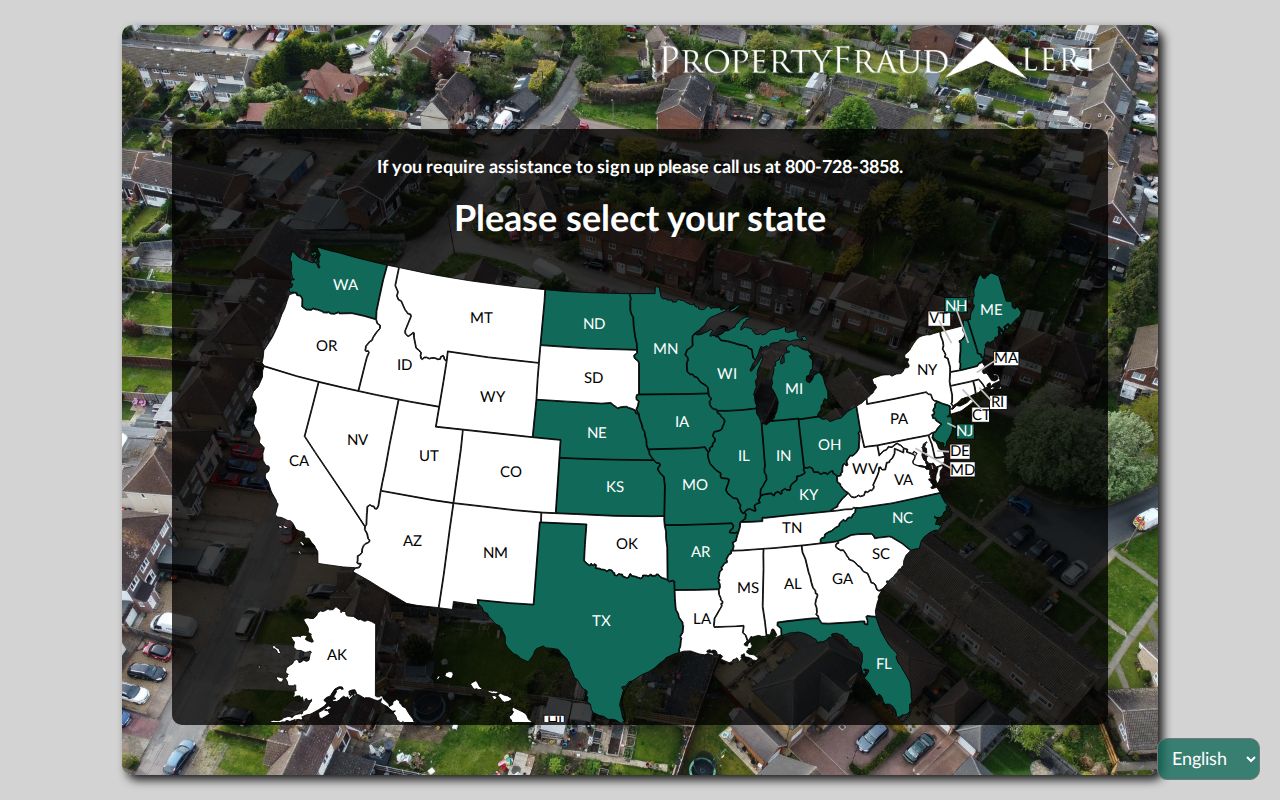
This alert is a forward-looking safeguard, not a title search or proof of ownership.
Obtain a Baraga County Deed
Match the format to the purpose. Choose an online image, a plain office copy, or a certified copy. Before ordering, note the names and instrument type. Note the recording date, book and page or instrument number, and legal description. The online Fidlar routes may provide the index or image under vendor terms. The free in-person database helps locate the citation. The Register of Deeds supplies official copies.
A certified copy carries the recorder's certification, unlike an image printed from a search result. Contact the office about mail procedure, payment, and turnaround; it publishes no complete mail-order workflow. For a broad ownership search, use the former-owner chain process. For one cited instrument, simply give the office the exact reference.
Recorded is not guaranteed. The Baraga County index reports filed papers, not a title opinion, and an unrecorded interest or defect may still exist.
Some ownership, boundary, or lien issues call for a title professional. Recorder staff can locate and copy instruments, but they cannot give legal advice.